Pedro Ortega
Cellular Stress Signaling and PAR biology
e-mail: pedro.ortega@cabimer.es
Google Scholar: Pedro Ortega
ORCID: 0000-0003-4216-3695
SCOPUS: 57211903935
X: @pedroorteg
Bluesky: @pedroorteg.bsky.social

Pedro Ortega
Cellular Stress Signaling and PAR biology
e-mail: pedro.ortega@cabimer.es
Google Scholar: Pedro Ortega
ORCID: 0000-0003-4216-3695
SCOPUS: 57211903935
X: @pedroorteg
Bluesky: @pedroorteg.bsky.social

Overview: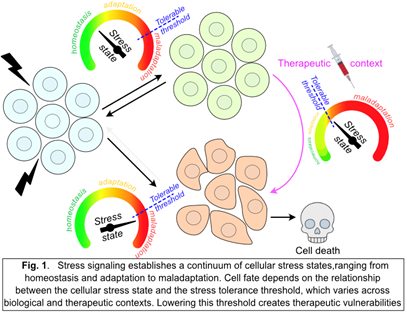
Cells are continuously exposed to endogenous and environmental stressors, including DNA damage, oxidative stress, and viral infection. To cope with these challenges, they activate stress signaling pathways that determine whether cells restore homeostasis and survive or progress toward cell death. A central question is how stress signaling pathways coordinate the cellular responses that drive survival or cell death, a challenge with implications for human disease, such as cancer, and the development of novel therapeutic strategies.
Current research lines:
1- PAR Signaling in Cellular Stress Responses
Poly(ADP-ribose) (PAR) biology represents a fundamental stress signaling network that enables cells to rapidly respond to DNA damage, oxidative stress, viral infection, and other cellular perturbations. PARP enzymes orchestrate these responses by synthesizing PAR polymers that regulate protein interactions, chromatin organization, nucleic acid metabolism, and biomolecular condensates. Through DNA damage studies, our work has contributed to understanding how PAR signaling safeguards genome stability and how its dysregulation creates therapeutic vulnerabilities in cancer. However, PAR signaling extends far beyond DNA repair, and we have found that it regulates RNA metabolism and translation. These observations highlight a broader spectrum of PAR-dependent cellular responses beyond genome maintenance and raise fundamental questions about the full range of causes and consequences driven by PAR signaling. My research seeks to understand how PAR signaling is regulated across diverse stress conditions to control cellular adaptation and cell fate, uncovering therapeutically targetable vulnerabilities.
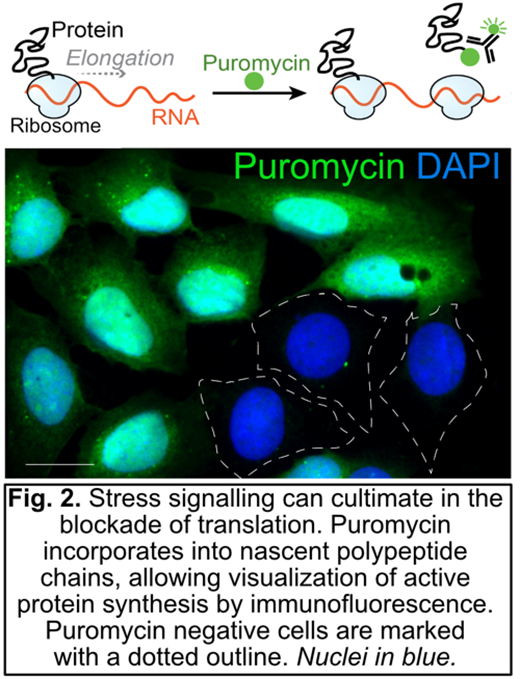 2- Translational Control in Cellular Stress Responses
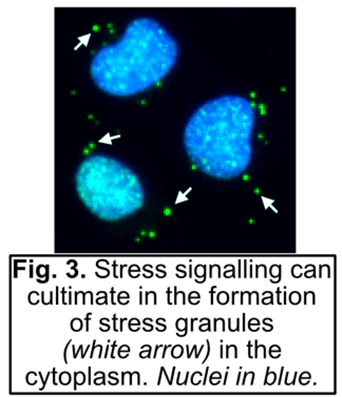
Translational control represents a key downstream output of stress signaling pathways, including protein misfolding, oxidative stress, and viral infection. These pathways converge on the rapid reprogramming of protein synthesis, yet the mechanisms connecting stress sensing to translational control are not yet fully understood. Our studies have contributed to the identification of factors that modulate translation during viral infection, DNA damage, and endogenous double-stranded RNA signaling. These findings suggest that translational control constitutes a fundamental component of cellular stress signaling and have motivated my current research into how stress signaling pathways remodel protein synthesis and how this can be therapeutically exploited.
I have selected 10 publications from my full record, which can be a found at ORCID: 0000-0003-4216-3695.